


The status of deforestation in Indonesia in 2025
Indonesia: According to an investigation by the organization Auriga Nusantara, deforestation in Indonesia increased by 66 percent in 2025. The loss of rainforest was particularly severe in Sumatra, Borneo and Papua – driven by palm oil, pulp, mining and agribusiness plantations.
The Indonesian NGO Auriga Nusantara has published the results of its study on forest loss, “Status of Deforestation in Indonesia 2025” (STADI 2025). According to the report, Indonesia lost a total of 433,751 hectares of forest in 2025 – an increase of 66 percent compared to the 261,575 hectares recorded in 2024. Particularly striking is the sharp rise in deforestation on the three major islands of Sumatra, Borneo and Papua.
Since 2023, Auriga Nusantara has published annual deforestation figures for Indonesia and made them available on the public platform Simontini (Indonesia Land Cover and License Information System) as maps of deforestation, concessions and land use for 2025, 2024 and 2023.
After several years of progress in forest policy, Indonesia under President Prabowo Subianto is once again banking on economic growth based solely on resource extraction. During his term in office, more concessions have been granted to palm oil, paper and mining companies. In addition, the government is pushing “National Strategic Projects” (PSN), steamrolling objections and leaving little room for resistance.
This development is not reflected in the official figures, which obscure realities on the ground and slow down genuine measures to halt deforestation, says Auriga Nusantara.

Three provinces on Sumatra that suffered catastrophic landslides and floods after the cyclone in November 2025 recorded dramatic increases in deforestation compared to the previous year: Aceh 426 percent, North Sumatra 281 percent and West Sumatra 1,034 percent – in habitat of megafauna.
Learn more about the consequences of deforestation on Sumatra for paper, palm oil and gold.

Borneo once again has the highest deforestation rate, as it has for the past twelve years. Particularly glaring are extensive concessions for the paper and pulp industry. Save Our Borneo and Rainforest Rescue have long warned of the destruction for paper in the heart of Borneo.

Papua lost 60,337 hectares more forest in 2025 than in the previous year. The largest clear‑cutting is taking place in Merauke district, where entire ecosystems are being destroyed for a sugar and bioethanol project in the name of “food security” and with the involvement of the military.
We are working to save this outstanding rainforest, supporting environmental defenders in Papua and have also appealed to the United Nations to stop the brutal clear‑cutting in the south of Papua.

The extraction of raw materials such as nickel and gold for digitalization and electric vehicles also left deep scars on the rainforest in 2025.
Examples include nickel mines on Sulawesi, in the Moluccas and on the Raja Ampat Islands west of Papua.
The Gag nickel mine on Raja Ampat lies in the Coral Triangle, a marine habitat of unparalleled biodiversity.
Read and download Auriga Nusantara’s presentation with tables, maps and photos: “Status of Deforestation in Indonesia 2025” (STADI 2025)
Rainforest Rescue is active with projects, campaigns and petitions on Sumatra, Borneo, Papua and Sulawesi. Learn more and sign our petitions:
- Petition: Protect the habitat of Tripa’s orangutans!
- Petition: Stop APRIL, Indonesia’s ruthless paper and pulp giant!
- Petition: NO to “Food Estates” in the peat forests of Borneo!
- Petition: Stop the destruction of Papua’s Marind forest!
- Project: Mangroves, peat bogs, swamps: protecting Aceh’s wetlands
- Project: Protecting the Tapanuli orangutan forest
- Project: Protecting Borneo’s rainforests and empowering Indigenous people
- Project: Saving the rainforest of southern Papua and empowering Indigenous Papuans
- Project: Women leading in Sulawesi: Protecting the forest from nickel corporations
This page is available in the following languages:
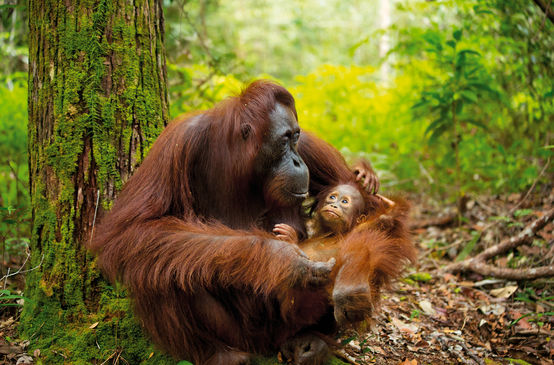
Defending rainforests in Southeast Asia
The forests of Southeast Asia are the last refuge and habitat of orangutans, Sumatran tigers, birds of paradise and Komodo dragons.
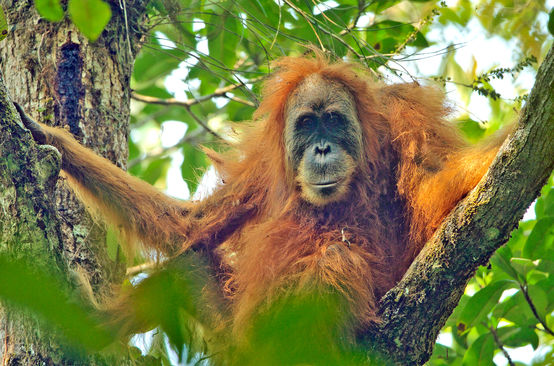
Stop bulldozing the Tapanuli orangutan!
A dam for a 510 MW hydropower plant in Batang Toru forest on Sumatra could spell oblivion for the recently discovered Tapanuli orangutan.
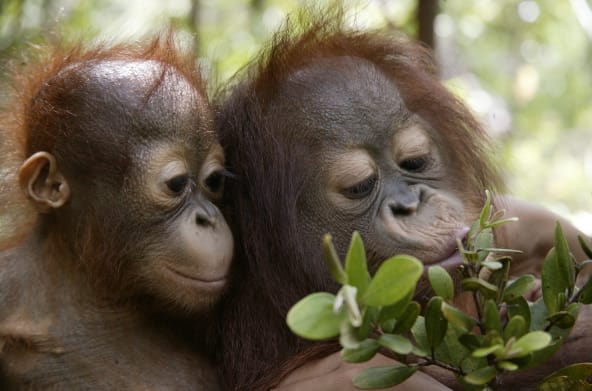
The rainforest
A green sea of ferns, mosses, vines and ancient trees. Iridescent butterflies and colorful birds. Flowers in every hue of the rainbow. The “green lung” is a natural wonder of the world. Find out more about the world’s most diverse, fascinating and threatened ecosystem.