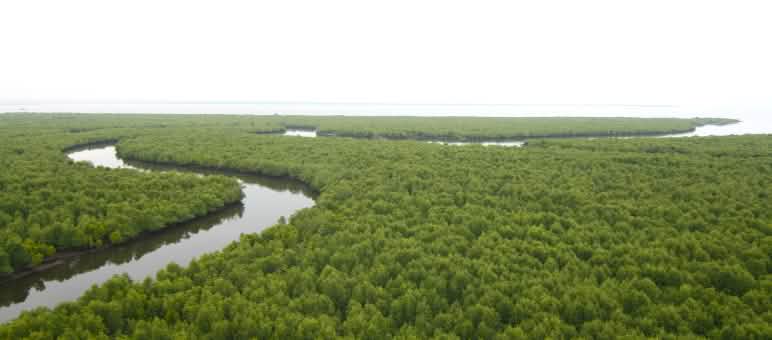
A powerful voice against carbon-credit trading in Aceh’s mangrove forests
Indonesia: Sumatra’s mangrove forests are being turned into commodities in the global carbon-credit trade. The social and ecological consequences are grave. Seventy-two organizations are calling on the government, the Livelihoods Fund and Verra, the carbon standards body, to end trading in carbon credits from Aceh’s mangrove forests in Sumatra.
Carbon credits allow large corporations to keep polluting instead of genuinely reducing their emissions. Specialized investment funds have been established and standards developed for the growing carbon trade. Governments and corporations expect to profit from it.
The projects involve intact forests, where carbon remains stored, and degraded areas to be replanted in order to absorb carbon dioxide. One example is the project “Mangrove restoration and coastal greenbelt protection in the East coast of Aceh and North Sumatra Province, Indonesia.”
According to the implementing organizations, this project has restored more than 5,000 hectares of degraded mangrove forest since 2011. The Danone Group is its main investor.
Yet the consequences are serious, both ecologically and socially. Many of the planted mangroves do not survive, biodiversity does not improve and new environmental problems emerge. The credits are overvalued, while the causes of mangrove destruction for aquaculture, palm oil or charcoal are not being addressed. Land grabbing is common, and Indigenous people’s livelihoods and their role in independently protecting and using the forests are ignored. Instead, as is also the case on the east coast, local people are made scapegoats through claims that they themselves are destroying the mangroves because they lack knowledge. It reveals the contempt shown toward people there.
The forest becomes a commodity, and local people become mere objects.
In October 2025, the Indonesian government and Verra, the carbon standards organization, signed an agreement that applies across Indonesia and, beyond the project mentioned above, to the entire mangrove belt along Sumatra’s 2,000 km east coast. The aim is to integrate Indonesian projects into the global carbon market. This places the project among Indonesia’s most significant blue carbon initiatives.
After 15 years of experience with this project, local people and the environmental movement are deeply concerned. Rainforest Rescue and our partner organization Aceh Wetland Forum have closely examined the project, spoken with local people and analyzed numerous documents.
On June 16, 2026, 72 Indonesian and international organizations sent a letter to the Livelihoods Fund, Verra and Indonesia’s Ministry of Forestry.
They demand:
>> End the trading of carbon credits from the mangrove forests along Aceh’s east coast.
>> Upgrade the protection status of the mangrove area.
>> Grant Indigenous communities their forest rights.
Read the letter from the 72 organizations and detailed additional information here: Stop carbon credit trading by the Danone Group in Aceh’s mangrove forests!
Indonesian version: Stop Perdagangan Karbon Danone Group di Hutan Mangrove Aceh!
Update:
Redd Monitor reported on June 18, 2026 (English)
Betahita reported on June 25, 2026 (Indonesian)
The Paris-based Livelihoods Fund is an impact investment fund SICAV-SIF designed to offer investors returns from CO₂ emissions. Its major corporate participants include Danone (a founding member and investor), L’Oréal, Mars Incorporated, Schneider Electric, Crédit Agricole, Michelin, Hermès, SAP, La Poste and Veolia.
Verra is a global carbon standards organization based in Washington, D.C. that certifies climate projects. Verra’s CCB Standard is regarded as a certification framework designed to ensure that land-management projects reduce CO₂ emissions while also benefiting local people and biodiversity.
Yagasu (Yayasan Gajah Sumatera) is the implementing organization on the ground.
Blue carbon refers to carbon stored in oceans, sediments and marine ecosystems. Mangroves and seagrass meadows store particularly large amounts of carbon and must therefore be preserved. Unfortunately, blue carbon initiatives prioritize profits: they are greenwashing projects that often fail to consider ecological conditions or the role and knowledge of local people.
This page is available in the following languages:

Indonesia: Protect the habitat of Tripa’s orangutans!
Officially, the peat forests of Sumatra are protected as a habitat for critically endangered orangutans. The encroachment of oil palm plantations must stop NOW!
Mangroves, peat bogs, swamps: protecting Aceh’s wetlands
Burned forests, stonewalling corporations, and Indigenous rangers replanting hope: Inside Aceh’s struggle for its last wetlands.
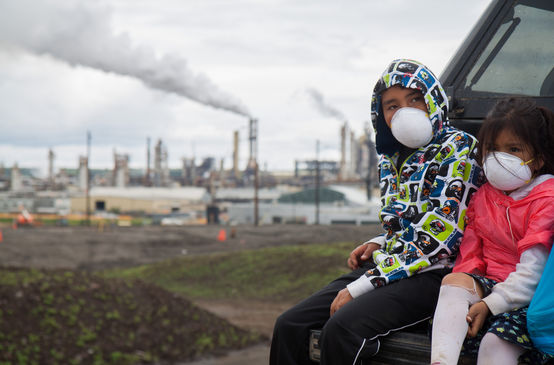
Carbon credits
A plethora of offsetting schemes say we can protect the climate without having to cut our emissions – but they are too good to be true.