
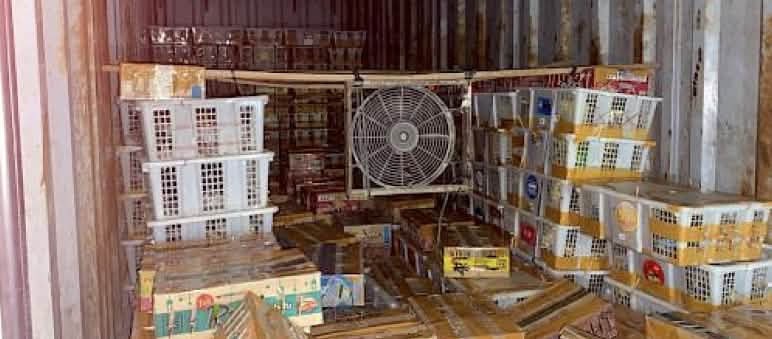

Wildlife trafficking: An August–September 2026 roundup from Latin America, Asia and Africa
Turtles hidden on buses, rhino horns in villages in Laos, pythons sold on social media: Seizures over the past two months expose a well-organized illegal trade that spans the globe. Here is a summary of the key developments.
Wildlife trafficking is one of the world’s most lucrative criminal markets, and it continues to grow. The National University of Singapore’s study Two decades of changes in the global network of illegal wildlife trade found that at least 110 countries are involved – more than twice the 49 recorded in 2000. Published this year in the journal Conservation Biology, the study shows that Asia has replaced Europe as the main trading hub for most species.
Latin America: From Mexico’s roads to Bolivia’s markets
In Mexico, the federal environmental protection agency (Procuraduría Federal de Protección al Ambiente, Profepa) seized 95 wild animals from a bus operating a regular passenger service in the north of the country. The animals found on the bus included 75 Mexican redleg tarantulas (Brachypelma emilia), packed in bags inside plastic boxes. The bus was traveling on Federal Highway 45 between Ciudad Juárez, a border city directly across from El Paso, Texas, and Chihuahua, about 370 kilometers to the south. Chihuahua is the capital of the state of the same name, Mexico’s largest by area. In a separate operation, Profepa seized two Bengal tigers from a house in Mazatlán, a resort town on the Pacific coast in the state of Sinaloa. The trade is increasingly moving online: Between May 2025 and June 2026, Profepa identified 1,119 listings on Facebook and Instagram that appeared to offer wildlife for sale illegally.
Paraguay is also taking action against wildlife trafficking online. Under Resolution No. 436, signed on September 22, 2026, the ministry of environment and sustainable development (Ministerio del Ambiente y Desarrollo Sostenible, MADES) adopted a rapid-response protocol to tackle wildlife trafficking on social media.
According to an analysis published in September, wildlife and timber trafficking in Central America relies on an established logistics corridor linked to transnational organized crime – with defined routes, specialized intermediaries and its own financial infrastructure. Guatemala alone accounts for 74 percent of the region’s bird trade. In Panama, forest camps containing unregistered rifles and slaughtered animals, including deer and ocelots, have been discovered.
After 4,366 animal and plant specimens were seized at airports and border crossings in 2024 and 2025, Costa Rica launched the #WhatYouCarry campaign, urging tourists not to take animals or plants with them. In Bolivia, municipal authorities in Riberalta, Beni, seized around 300 river turtle eggs (Podocnemis unifilis) from markets at the height of the breeding season.
Asia: Ivory and rhino horns in Laos, pangolins in India
Laos is emerging as a key hub. On August 16, eleven foreign nationals were arrested in Bolikhamxay province following the seizure of around 1.8 metric tons of suspected ivory and two carcasses resembling black panthers. A September 11 search in Luang Prabang uncovered items believed to be rhino horns, worked ivory, animal bile and traditional medicines made from various wildlife species.
On September 25, four people were arrested and 33 live animals, including blue-naped parrots and turtles, were rescued in Taytay, Palawan, in the Philippines. According to the Department of Environment and Natural Resources (DENR), 55 wildlife traffickers were arrested and more than 300 animals seized between January and August 2026. In India, four people were arrested in Rajsamand, Rajasthan, for selling pangolin scales during a joint operation by the Forest Department and the Wildlife Crime Control Bureau (WCCB).
Impunity remains a problem
A report by the World Wide Fund for Nature (WWF), the wildlife trade monitoring network TRAFFIC (Trade Records Analysis of Flora and Fauna in Commerce) and the Canadian GuArdean Centre for Conservation Research found that fewer than half of tiger-related arrests and seizures in Southeast Asia lead to penalties or convictions.
Africa: Asian criminal networks at work
An analysis marking World Elephant Day on August 11 warned that criminal networks remain active despite major seizures and that southern Africa appears to have returned to the center of the global ivory trade: Countries in the Southern African Development Community (SADC) account for more than 80 percent of seized goods.
A 2026 report issued under the US Eliminate, Neutralize, and Disrupt Wildlife Trafficking Act (END) lists Cameroon, the Democratic Republic of the Congo, Madagascar and Nigeria as “countries of concern,” with Mozambique added for the first time.
In South Africa, on World Rhino Day, September 22, the Hawks wildlife trafficking unit of the South African Police Service’s Directorate for Priority Crime Investigation (DPCI), made an arrest in Klerksdorp:
The suspect, Vietnamese national Nguyen Huu Dong, is a cousin of the suspected leader of an extensive criminal organization operating in South Africa, Mozambique and several countries in Central and West Africa. Smuggling routes lead from these countries to Southeast Asia.
The investigation concerns a suspected staged robbery and the possible illegal sale of 98 rhino horns. Here, too, traffickers use social media: In Delareyville, two men were arrested after offering a live African python for sale online for 5,000 rand (about 260 euros).
Wildlife trafficking and deforestation: Two sides of the same crisis
Rainforest Rescue wants to help raise awareness of international wildlife trafficking, which cannot be separated from forest destruction. The two practices overlap and reinforce each other. Every hectare of forest that is cleared for timber, livestock farming, monocultures or mining reduces wildlife habitat, pushing animals into ever smaller, more fragmented areas and making them easier to capture.
Poachers use the same roads opened up by deforestation. Often, the same criminal networks are involved: In Central America, wildlife and precious timber move along the same organized crime routes.
For species already threatened by habitat loss, illegal hunting can deal the final blow. Protecting forests also means protecting the animals that live in them. Fighting wildlife trafficking, in turn, safeguards entire ecosystems – and with them the Indigenous and local communities that depend on them.
Sources
Global context
- Mongabay, Asia now hub of growing illegal wildlife trade across 100+ countries, study shows, March 2026.
Latin America
- Infobae, Más de 70 tarántulas, 20 tortugas y dos tigres de bengala fueron asegurados por Profepa en Chihuahua y Sinaloa, September 19, 2026.
- YoInfluyo, El tráfico de fauna se digitaliza, August 2026.
- MADES (Ministry of Environment and Sustainable Development, Paraguay), MADES fortalece la lucha contra el tráfico de fauna silvestre en internet con nuevo protocolo de actuación rápida, September 25, 2026.
- Noticias Ambientales, Tráfico de fauna y madera en Centroamérica: rutas criminales, especies saqueadas y vacíos legales, September 17, 2026.
- Infobae, Cómo opera el tráfico de fauna y madera en Centroamérica según las rutas, especies y vacíos legales detectados, September 14, 2026.
- The Tico Times, Costa Rica Targets Wildlife Trafficking With New Tourist Campaign, September 1, 2026.
- Opinión, Riberalta: Decomisan cerca de 300 huevos de peta en operativo contra el tráfico de fauna silvestre, September 11, 2026.
Asia
- Laotian Times, Luang Prabang Seizes 28kg of Suspected Wildlife Products, Detains Foreign Man, September 19, 2026.
- Daily Tribune, Four arrested, 33 animals rescued in alleged wildlife trade bust in Palawan, September 29, 2026.
- Jaivardhan News, Rajsamand Pangolin Skin Seized, September 24, 2026.
- Mongabay, From seizure to sentence: Weak prosecution leaves tigers vulnerable to trafficking in Southeast Asia: Report, September 2026.
Africa
- Mongabay, On ivory, follow the trafficking networks and not the headlines (commentary), August 11, 2026.
- United States Department of State, 2026 END Wildlife Trafficking Report, 2026.
- Daily Maverick, Wildlife trafficking net widens – Hawks nab a fifth suspect on World Rhino Day, September 24, 2026.
- The Citizen, Two arrested after python found for sale on social media in North West, September 2026.
This page is available in the following languages:
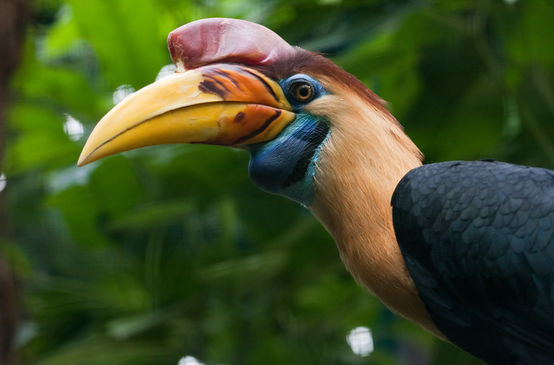
Giving captive birds their freedom
One million birds stolen a year – FLIGHT shadows smugglers and rescues captive songbirds so Indonesia’s wild songs can keep filling the forests.
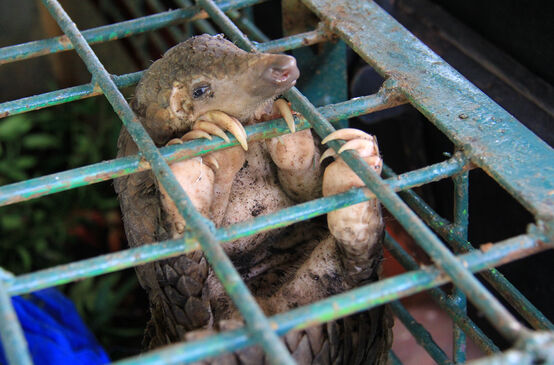
Shut down wildlife markets NOW!
It’s time to shut down wildlife markets and their brisk business in endangered and poached animals. They are a threat to both biodiversity and human health.